
ERP for Pharmaceutical Companies: Batch Traceability and Compliance
how ERP for pharmaceutical companies improves batch traceability, inventory management, quality control, and compliance while connecting production, sales, and finance in one system.
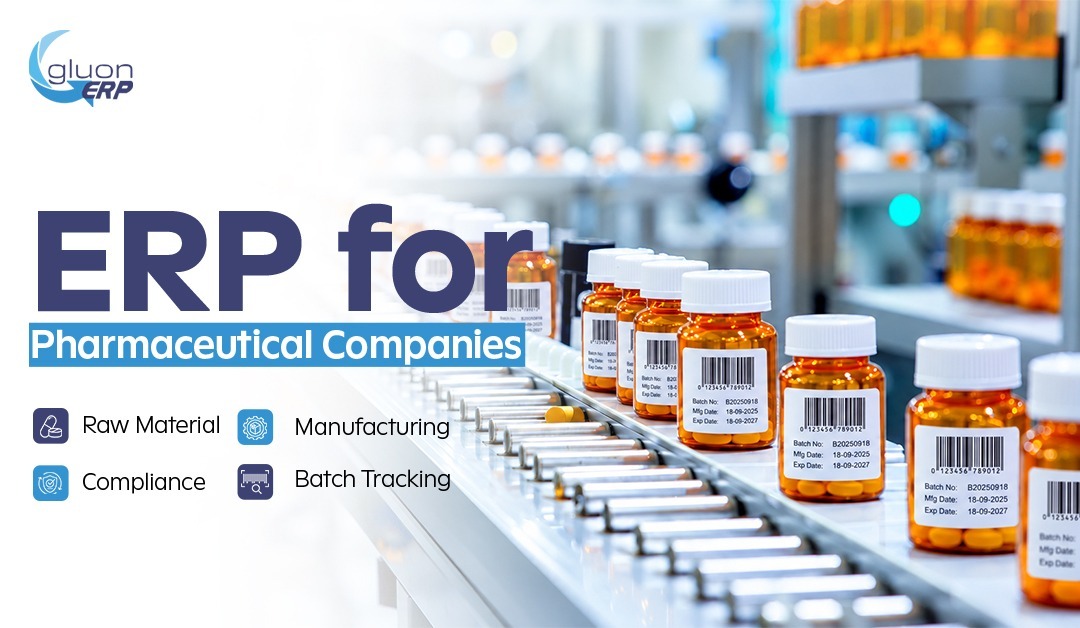
ERP for Pharmaceutical Companies: Batch Traceability and Compliance
Pharmaceutical companies manage complex operations where batch traceability, inventory control, quality management, and compliance are essential. From raw materials to finished medicines, every stage needs accurate and accessible records.
As pharmaceutical businesses grow, managing these processes through spreadsheets or disconnected software can lead to data gaps, inventory errors, delayed reporting, and difficulty tracing products.
This is where ERP for pharmaceutical companies can make a significant difference.
A pharmaceutical ERP connects manufacturing, inventory, purchasing, quality control, sales, distribution, and finance in one integrated system.
Why Pharmaceutical Companies Need ERP Software
Pharmaceutical manufacturing involves more than producing finished products. Businesses need to manage raw materials, production batches, expiry dates, quality checks, warehouses, distributors, and customer orders.
A reliable pharmaceutical ERP software can help businesses manage:
- Raw materials
- Batch numbers
- Expiry dates
- Production
- Quality control
- Finished goods
- Warehouse inventory
- Product distribution
- Customer orders
- Financial records
With connected data, teams can access important information without depending on multiple spreadsheets or manual records.
What Is Batch Traceability in Pharmaceutical Manufacturing?
Batch traceability is the ability to track a product or material throughout its lifecycle.
For a pharmaceutical company, this may include:
Raw Material → Production → Quality Check → Finished Product → Warehouse → Distributor → Customer
A traceable system allows businesses to identify where materials came from, which production batch they were used in, where finished products are stored, and where they were distributed.
This becomes especially important when investigating quality issues or managing product recalls.
How ERP Improves Batch Traceability
A pharma ERP system can connect batch information with purchasing, inventory, production, quality, and sales records.
1. Track Raw Materials
Record supplier information, purchase details, quantities, batch numbers, and relevant material information.
2. Track Production Batches
Connect production records with the materials and quantities used to manufacture each batch.
3. Track Finished Products
Maintain batch-level information for finished products and their warehouse locations.
4. Track Distribution
Connect sales and distribution records with the relevant product batches.
This creates a complete information trail from raw material to customer.
Pharmaceutical Inventory Management
Inventory management is one of the biggest challenges for pharmaceutical businesses.
Unlike standard inventory, pharmaceutical products often require close monitoring of batch numbers, manufacturing dates, expiry dates, and storage locations.
Effective pharmaceutical inventory management can help businesses:
- Track batch-wise stock
- Monitor expiry dates
- Manage warehouse locations
- Track stock movements
- Reduce inventory discrepancies
- Improve stock visibility
- Support controlled product movement
An ERP system can bring these activities into one connected workflow.
Expiry Date Management
Expired or near-expiry products can create financial and operational challenges.
With ERP-based inventory management, businesses can monitor product expiry dates and identify inventory approaching its expiry.
For businesses using FEFO (First Expired, First Out) practices, ERP workflows can help prioritize products based on expiry dates where appropriate.
ERP and Pharmaceutical Compliance
Compliance requires accurate records and controlled processes.
An ERP system can support pharmaceutical businesses by maintaining organized records across:
- Purchase
- Inventory
- Production
- Quality control
- Sales
- Distribution
- Approvals
- User activity
- Financial transactions
However, ERP software alone does not guarantee regulatory compliance. Pharmaceutical companies should configure their ERP according to the applicable regulatory requirements, quality procedures, and industry standards.
Quality Control in Pharmaceutical ERP
Quality control is a critical part of pharmaceutical manufacturing.
Materials may need to be inspected before production, while finished products may require quality checks before release.
An integrated pharmaceutical ERP system can connect quality processes with inventory and manufacturing.
For example:
Material Received → Quality Check → Approved/Rejected → Production
And:
Production Completed → Quality Check → Released/Rejected → Finished Goods
This provides better control over the movement of materials and finished products.
Managing Rejected and Quarantined Stock
When a material or product fails a quality check, it should be clearly identified and separated from available stock according to the company's procedures.
ERP workflows can help record:
- Batch number
- Product
- Quantity
- Status
- Reason
- Quality decision
- Approval history
This provides a clear record of what happened to the affected stock.
Product Recall and Batch Traceability
Product recalls are one of the strongest reasons pharmaceutical companies need effective batch traceability.
Suppose a quality issue is identified in one particular batch.
The company may need to determine:
- Which raw materials were used?
- When was the batch produced?
- How many units were manufactured?
- Where is the remaining stock?
- Which distributors received it?
- Which customers received the product?
Without connected records, finding this information can take considerable time.
With an integrated pharmaceutical ERP, businesses can connect batch information with inventory, production, sales, and distribution records.
Know the batch. Track the stock. Trace the distribution.
Benefits of ERP for Pharmaceutical Companies
A properly implemented ERP for pharmaceutical companies can help businesses:
- Improve batch traceability
- Track expiry dates
- Improve inventory control
- Reduce manual data entry
- Connect production and quality
- Improve warehouse visibility
- Support product recall processes
- Maintain organized records
- Improve reporting
- Connect operations with finance
The result is a more connected and controlled pharmaceutical operation.
How Gluon ERP Supports Pharmaceutical Businesses
Gluon ERP provides integrated business management capabilities for pharmaceutical companies and other manufacturing businesses.
Its modules can support key pharmaceutical operations, including:
Manufacturing
Manage production processes and manufacturing activities.
Inventory
Track products, stock movements, warehouses, and inventory records.
Batch Management
Maintain organized product and batch-related information across relevant business processes.
Quality Control
Connect quality checks with inventory and production workflows.
Purchase
Manage suppliers, purchases, and incoming materials.
Sales & Distribution
Track customer orders, invoices, and product movement.
Finance & Accounting
Connect operational transactions with financial records.
This integrated approach allows pharmaceutical businesses to manage their operations through connected workflows instead of separate systems.
Why Integrated ERP Matters for Pharma
When finance, inventory, production, quality, purchasing, and sales operate separately, teams may spend significant time transferring and verifying information.
An integrated pharma ERP software creates a connected flow:
Purchase → Inventory → Production → Quality → Finished Goods → Sales → Finance
This can reduce duplicate data entry and provide teams with more consistent business information.
How to Choose Pharmaceutical ERP Software
Before selecting an ERP system for pharmaceutical companies, evaluate the system against your actual business requirements.
Ask the ERP provider:
- Does it support batch tracking?
- Can it manage expiry dates?
- Can materials be traced through production?
- Can finished goods be tracked by batch?
- Does it support quality workflows?
- Can access be controlled by user roles?
- Are approvals and activity logs available?
- Can it manage multiple warehouses?
- Can it support pharmaceutical distribution?
- What implementation and support are provided?
The right system should fit your operational processes rather than forcing your business into a generic workflow.
Pharmaceutical ERP Software in Pakistan
For pharmaceutical manufacturers and distributors in Pakistan, choosing the right ERP also means considering local business processes, taxation, reporting, inventory requirements, and operational workflows.
Pharma ERP software in Pakistan should provide more than accounting. It should help connect production, inventory, quality, sales, distribution, and finance.
Gluon ERP is designed to support businesses in Pakistan with connected ERP modules and business automation capabilities.
Final Thoughts
For pharmaceutical businesses, batch traceability and compliance are closely connected to everyday operations.
Every raw material, production batch, quality decision, inventory movement, and customer transaction can become part of the product's lifecycle record.
A connected ERP for pharmaceutical companies can help bring these processes together, improve visibility, and make important information easier to track.
Gluon ERP connects manufacturing, inventory, quality control, purchasing, sales, distribution, and finance in one platform.
If your pharmaceutical business is looking to improve batch management, inventory visibility, and connected operations, an integrated ERP can provide the foundation you need.
👉 Explore Gluon ERP: www.gluonerp.com
#GluonERP #PharmaceuticalERP #PharmaERP #ERPSoftware #PharmaceuticalManufacturing #BatchTraceability #PharmaceuticalInventoryManagement #QualityControl #PharmaIndustry #ERPInPakistan
Request Your Free
Gluon ERP Demo



and ERP insights delivered to your inbox.


