
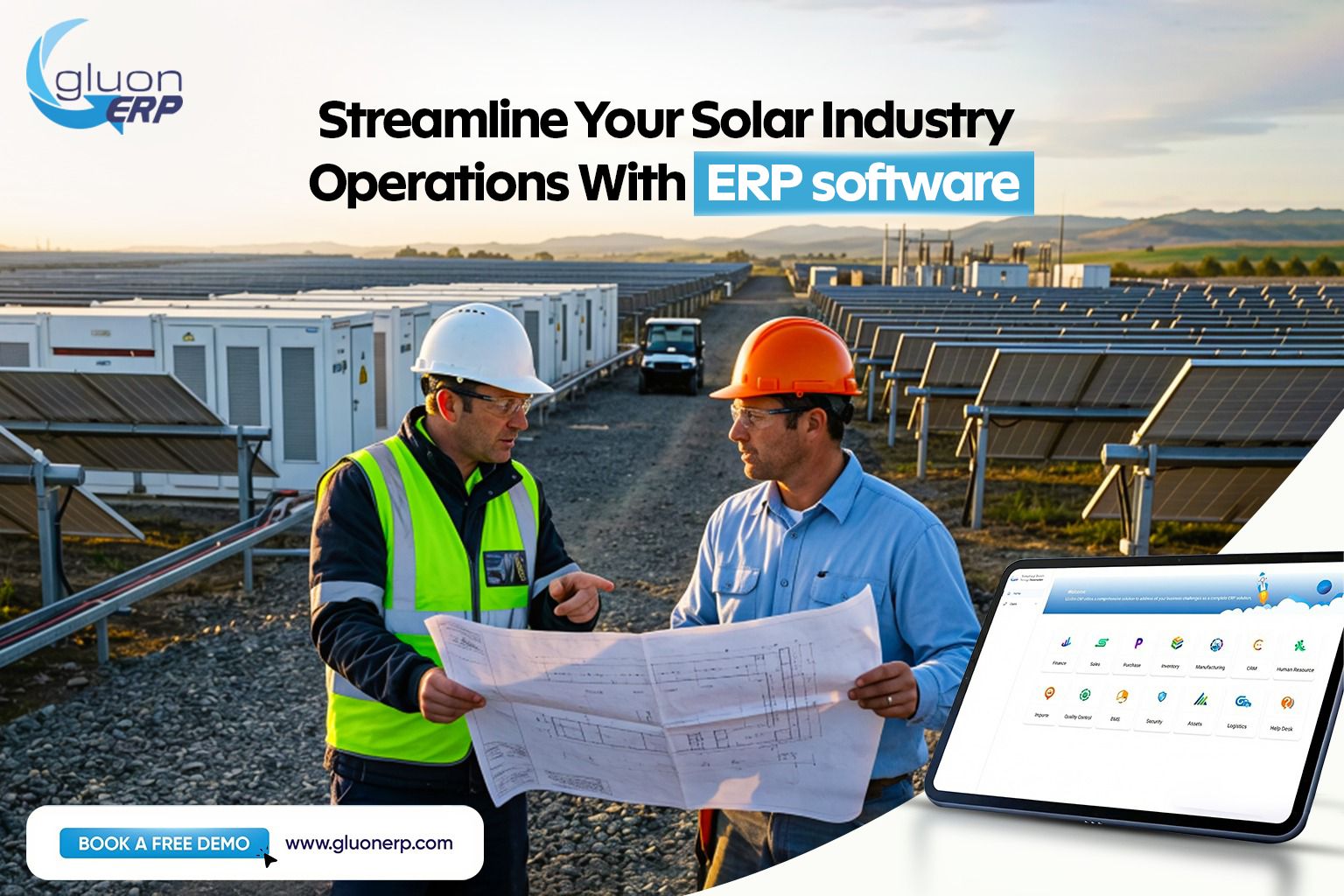
Streamline Your Solar Industry Operations With ERP Software
The solar energy industry is undergoing its most exciting transformation in decades. Fueled by rapid advances in digital technology and renewable energy innovation, solar power is no longer just a clean alternative it’s becoming smarter, more efficient, and deeply integrated with modern business systems. At GluonERP, we appreciate how digital transformation drives industries forward, and the solar sector is one of the most compelling examples of this shift.
1. The Digital Revolution Meets Solar Energy
Technology has always played a role in solar energy, from early photovoltaic (PV) cells to modern solar panels. But over the past decade, this relationship has intensified particularly thanks to digital tools like artificial intelligence (AI), data analytics, and automation. These technologies are not only optimizing solar generation but also streamlining operations, reducing costs, and improving reliability across solar systems.
One of the most visible advancements is the integration of AI-driven performance monitoring. Modern solar systems now deploy intelligent software that continuously analyzes solar panel output, detects inefficiencies, and even anticipates equipment failures before they occur. This shift from reactive maintenance to predictive diagnostics boosts uptime and lowers long-term operational costs.
2. Smart Solar Tracking for Maximum Output
Today’s solar installations increasingly adopt solar tracker technology systems that automatically adjust panel orientation to face the sun throughout the day. These devices can significantly enhance energy output by ensuring panels receive optimal sunlight exposure.
With the help of integrated sensors and algorithms, tracker systems can boost generation efficiency by up to 25% compared to static installations, making them a smart choice for both utility-scale and commercial solar farms.
3. Energy Storage Making Solar a 24/7 Power Source
One traditional limitation of solar power has been intermittency the fact that panels only produce electricity when the sun shines. However, advancements in energy storage technology, particularly battery storage, are transforming solar into a dependable energy solution around the clock.
Smart storage systems work hand in hand with solar arrays to store excess energy during peak production hours and release it when demand spikes. This innovation not only stabilizes the grid but also opens new opportunities for businesses to manage energy costs and sustainability targets more effectively.
4. AI and Machine Learning: The Brains Behind Efficiency
Artificial intelligence is quickly becoming the backbone of modern solar infrastructure. Through machine learning models, solar systems can:
- Analyze weather and sunlight patterns to better forecast energy production.
- Identify performance dips due to dust accumulation, shading, or technical defects.
- Optimize energy storage and distribution to maximize profits and reliability.
These AI algorithms also support smart grid integration, enabling solar generation to sync seamlessly with regional distribution networks a crucial step as more regions push for decentralized and renewable based power systems.
5. Innovation in Solar Materials and Design
Breakthroughs in material science are also driving the sector forward. Next-gen solar panels such as bifacial panels that collect sunlight from both sides are helping increase energy capture without requiring more physical space.
Emerging research, such as 3D solar cells and flexible photovoltaic fabrics, promises future solar solutions that can be integrated into building materials, clothing, or even portable products.
6. Solar’s Role in the Global Energy Landscape
The global solar capacity continues to surge, with countries like China leading the world in solar deployment. China alone accounts for a significant share of photovoltaic manufacturing and installations, underscoring how technology leadership supports renewable growth at scale.
As production costs fall and efficiency improves, solar power is no longer a niche energy source it’s becoming a core pillar of worldwide energy strategies. From commercial rooftops to large utility projects, solar is reshaping how energy is produced, consumed, and managed.
7. What This Means for Your Business
For businesses exploring solar adoption, these technological advancements present both opportunities and competitive advantages. More accurate energy forecasting reduces waste, while smart automation tools make maintenance more cost-effective. Integrated systems also allow solar installations to dovetail with enterprise resource planning (ERP) platforms like GluonERP, enabling seamless tracking of energy performance alongside other business metrics.
The solar industry’s evolution is a prime example of how technology can transform an entire sector increasing efficiency, lowering costs, and enabling sustainability at scale.
At GluonERP, we believe in leveraging smart technology to empower industries, streamline performance, and unlock new potential just as digital innovation is doing for solar energy worldwide.
If your business is exploring renewable energy or smart tech integration, now is the time to embrace these advancements and lead the change toward a sustainable digital future.


Comments